Buying guide
Jewellery Buying Guide
A short guide to what jewellery product names say before buying: which metal a piece is made of, what "18K gold plated" means, how a natural stone differs from a lab-made one, how ring size is taken, and how each piece is kept. What follows is a general description of what is common in the market; the product description and what its store states remain the first reference.
Metal first
The metal decides a piece's price, lifespan and care, and it is the most important thing to read in a product name. The word "karat" causes the most confusion: in solid gold it is the share of gold in the whole piece, while on a plated piece it is the karat of the thin plating layer alone, not of the piece.
Below are the common metals, each described in general terms. A piece that names more than one metal is grouped by its base: gold-plated silver is silver, and plated steel is steel.
Figures as of 4 November 2026
925 silver
925 means the piece is 92.5% silver, with the rest usually other metals added for strength, since pure silver is soft. The number is usually stamped inside a ring or on the clasp. "Italian silver" mostly refers to where or in what style it was made. Silver may be plated with gold or rhodium to take on its colour, and stays silver at its base.
38 products · 3 stores · From SAR 140
-
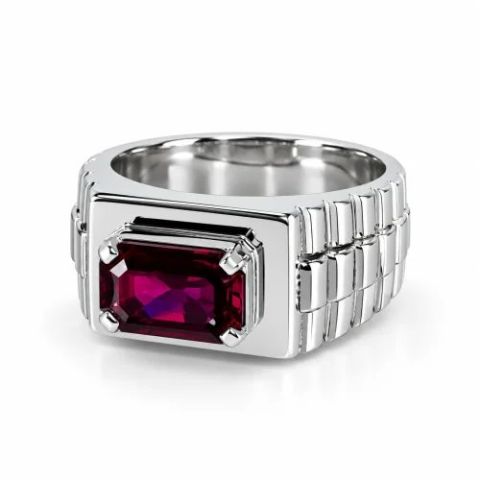 Men's Silver Ring with Natural Rhodolite Garnet
SAR 800
 Sapphire Zone
Partner store
-
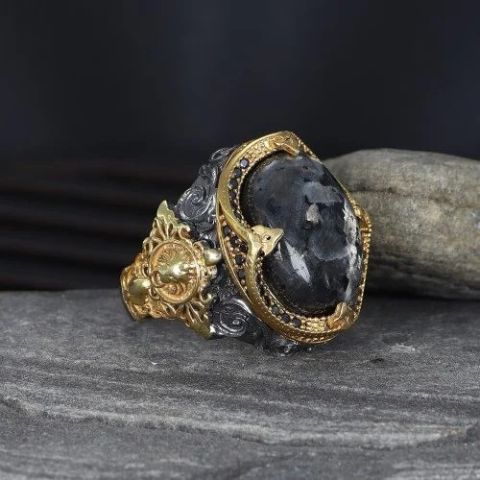 Men's 925 Silver Ring with Natural Larvikite and Nano Zircon
SAR 650
 Amyal
Partner store
-
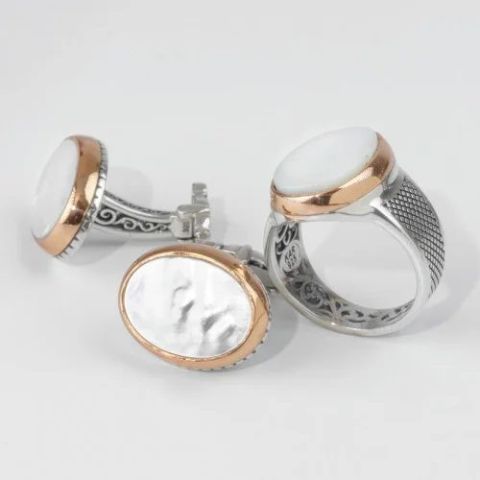 Men's Natural Shell Silver Ring and Cufflinks Set
SAR 339.25
 Golden Seller
Partner store
-
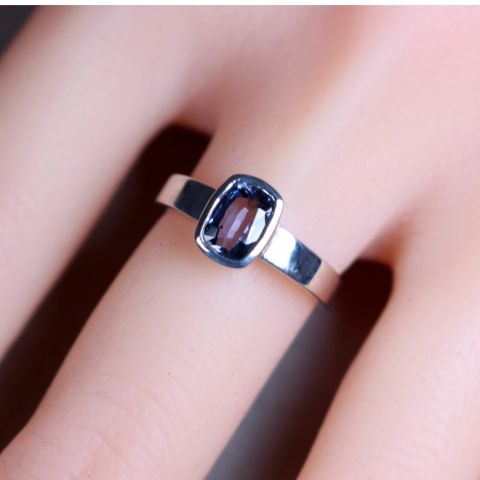 Women's Silver Ring with Light Purple Natural Spinel
SAR 1,100
Sapphire Zone
Partner store
Gold plated
A piece of a base metal such as copper or brass with a thin layer of gold on top. The "18K" in its name is the karat of the layer alone, so it costs far less than gold and suits trend pieces that are changed often. The layer fades with friction, perfume and water depending on its thickness, and anyone allergic to metals should check the base metal in the product description.
21 products · 2 stores · From SAR 34
-
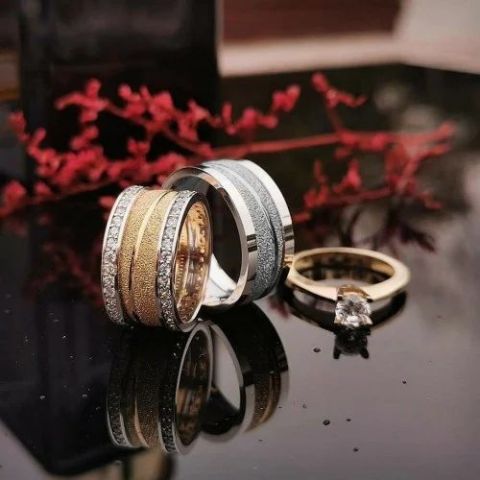 Gold-Plated Italian Silver Wedding Bands with Ring R-105
SAR 785
Amyal
Partner store
-
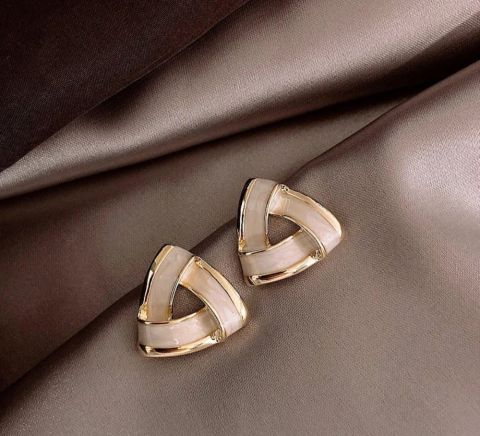 Triangle Stud Earrings, Gold-Plated
SAR 37
 Touch Me
Partner store
-
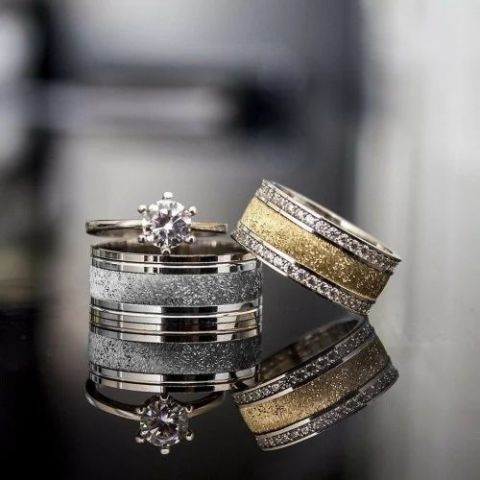 Gold-Plated Italian Silver Wedding Bands with Zircon Ring R-104
SAR 730
Amyal
Partner store
-
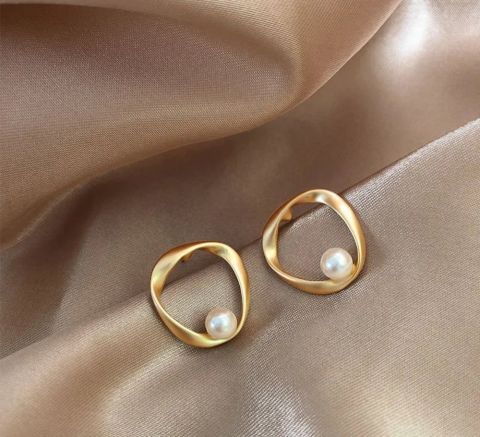 Pearl Bead Earrings, Gold-Plated
SAR 34
Touch Me
Partner store
Stainless steel
An alloy of iron and chromium that resists rust, so it does not easily change colour and handles daily wear and water. It comes in its own silver tone or plated in a gold colour, and that plating may thin over time. Anyone allergic to metals should check the steel grade named in the description.
4 products · 1 store · From SAR 92
-
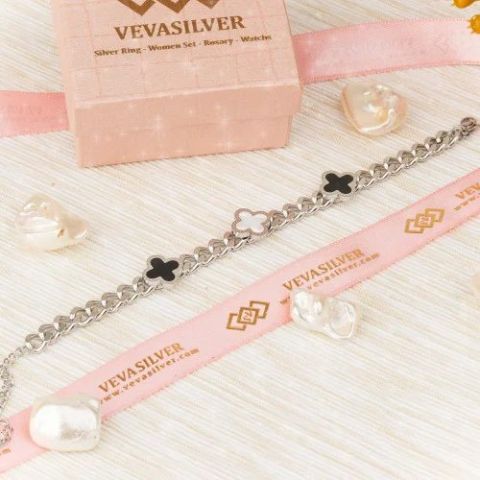 Women's Silver Stainless Steel Bracelet with Flower Details
SAR 92
Golden Seller
Partner store
-
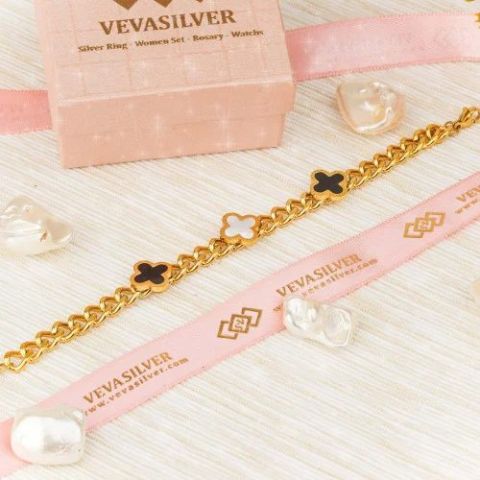 Women's Gold-Plated Stainless Steel Bracelet with Hook Clasp
SAR 92
Golden Seller
Partner store
-
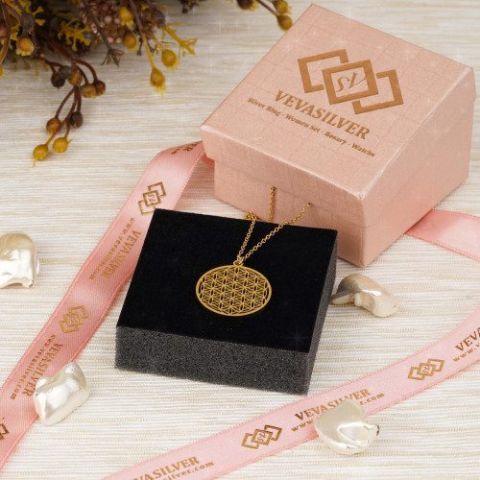 Women's Gold-Tone Stainless Steel Necklace
SAR 92
Golden Seller
Partner store
-
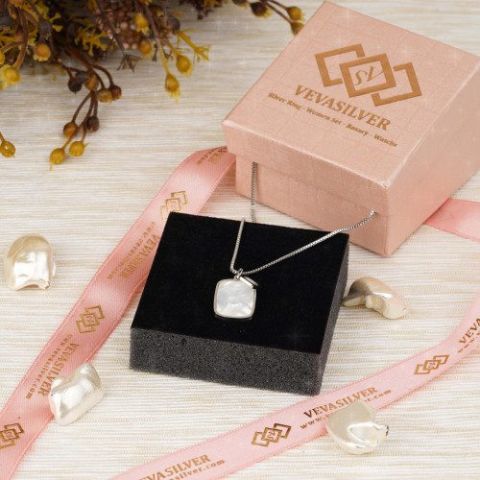 Women's White Stainless Steel Necklace
SAR 92
Golden Seller
Partner store
Karat gold
Karat is the share of gold in the whole piece: 24K is about 99.9%, 21K about 87.5% and 18K about 75%. Lower karats are harder and last better in everyday and stone-set pieces. Gold is usually priced by the gram at the day's rate, plus a making charge, and a karat stamp and an invoice showing the weight are worth asking for.
Nothing listed in this group right now.
Stones: natural or lab-made?
A natural stone is mined from the earth; a lab-made one usually has the same composition at a lower price; an imitation, such as glass, only looks alike. The product description says which one it is, and a gem lab certificate is worth asking for on costly pieces.
Zircon, a natural stone, is often confused with cubic zirconia, a bright lab-made stone that is sometimes labelled "zircon". Swarovski stones are polished, high-sparkle glass crystal, not gemstones.
A carat is a unit of stone weight equal to a fifth of a gram, and it is not a measure of quality on its own: colour, clarity and cut set a stone's value as much as its weight. Some stones are soft or porous, such as turquoise, opal, pearl and dyed agate, and need more care away from perfume and cleaners.
Loose gemstones
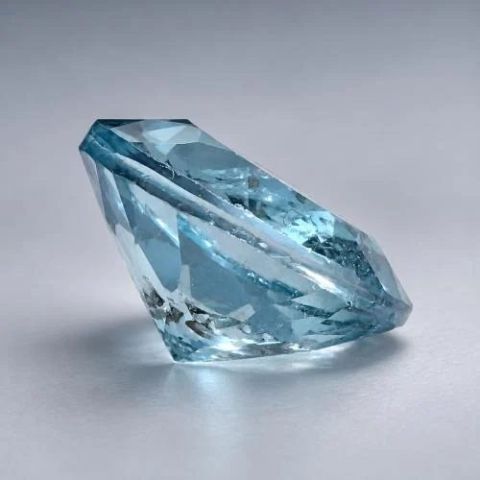
Stones sold on their own by the carat, to be set in a ring or pendant by a jeweller. Weight, colour, clarity and cut matter, as does whether the stone is natural or treated, and a certificate is worth asking for on costly stones.
1 product · 1 store · From SAR 354
Ring size
Ring sizes are usually given in the US system or as the inner diameter in millimetres. The easiest way to measure is a ring that already fits the same finger: its inner diameter is measured and compared with the store's size chart.
Fingers swell in heat and late in the day and shrink in the cold, so measuring at a mild time is better. A wide band usually needs half a size larger than a thin one. The product description says whether the size is adjustable and whether the store accepts a size change.
Jewellery care
Silver darkens over time as it reacts with air and moisture; this is its nature, not a flaw. It is polished with a dedicated cloth and kept in a closed pouch away from moisture.
Plated pieces go on after perfume and creams, not before, come off for washing, showering and swimming, are wiped with a dry cloth, and are stored apart so that rubbing does not wear the plating. Stainless steel needs the least care: washed with soap and water and dried.
Each piece is best kept separately, since hard stones scratch softer stones and metals.
Watches
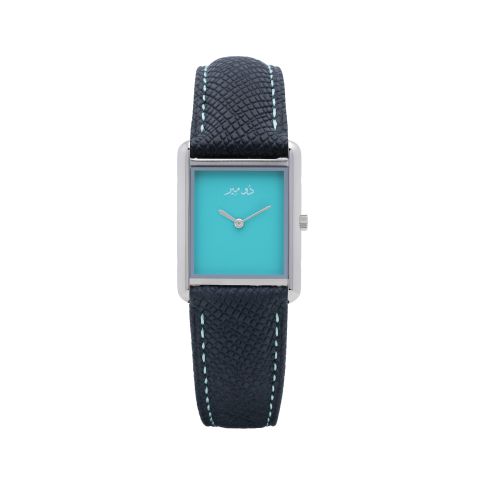
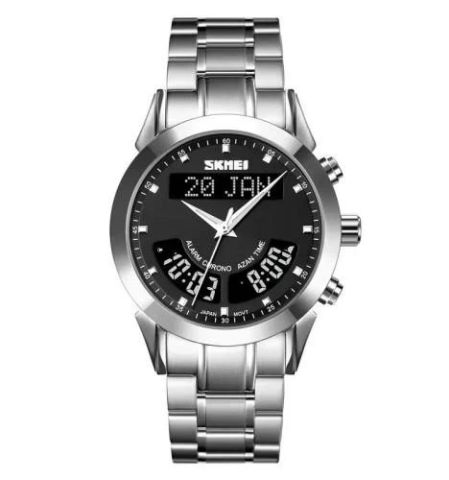
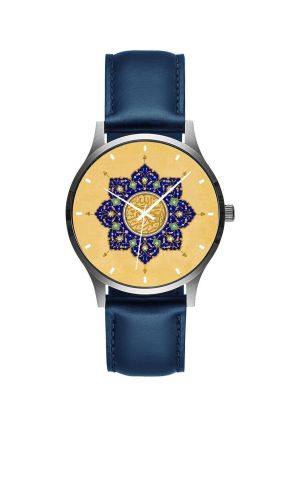
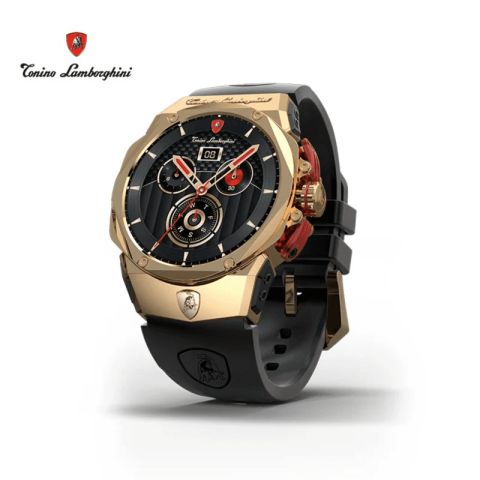
The movement comes first: quartz runs on a battery and is accurate and low-maintenance, while an automatic winds itself with wrist movement. Then the glass: hardened mineral glass (including Hardlex) is cheaper, and sapphire resists scratches far better. Water resistance is given as pressure: 3 ATM for splashes and hand washing, not swimming; 5 ATM for light swimming; 10 ATM for swimming.
19 products · 2 stores · From SAR 220


Prayer beads
Prayer beads are made from natural stones such as agate, onyx and tiger's eye, or from vintage resins prized by collectors such as Bakelite and Catalin, two of the first synthetic plastics of the twentieth century, whose older pieces are valued for colour and weight. They usually have 33 or 99 beads, and the material named, the head piece and the tassel are worth checking.
12 products · 2 stores · From SAR 126.50
-
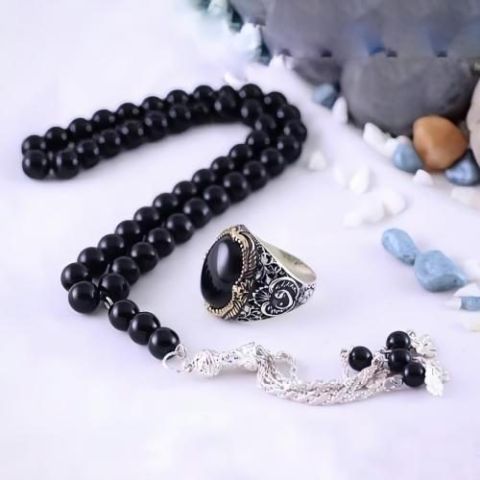 Black Agate Prayer Beads and 925 Silver Agate Ring Set
SAR 780
Amyal
Partner store
-
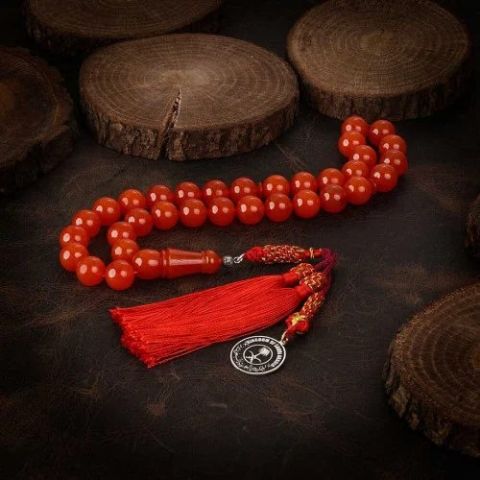 Orange Bakelite Prayer Beads with 925 Silver Saudi Emblem
SAR 126.50
Golden Seller
Partner store
-
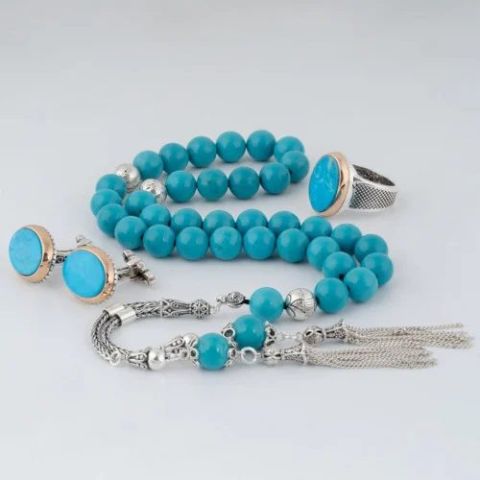 Men's Turquoise-Look Prayer Beads Ring and Cufflinks Set
SAR 632.50
Golden Seller
Partner store
-
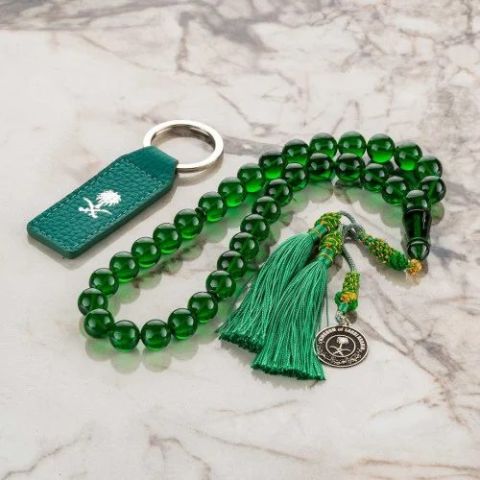 Onyx Prayer Beads with Saudi National Day Medallion
SAR 207
Golden Seller
Partner store
All jewellery and watches
Rings, sets, bracelets, watches and prayer beads from selected Saudi stores in one section.